Technology and AI in M&A Advisory
Technology in M&A advisory continues to change how advisors identify buyers, analyze businesses, manage information, and execute transactions. Artificial intelligence now represents another significant advancement in that evolution.
Historically, M&A advisory has proven difficult to disrupt through technology alone. Every M&A transaction presents unique financial, operational, legal, and interpersonal considerations. Furthermore, completing a transaction requires judgment, negotiation, creativity, and extensive interaction between buyers, sellers, and their advisors. Those fundamentals have not changed. However, technology has transformed many of the tools advisors use throughout the M&A process.
Buyer identification provides a clear example. An advisor’s effectiveness once depended heavily on personal relationships and the size their Rolodex. Today, extensive databases provide access to strategic buyers, financial buyers, and well-funded individual buyers across industries and markets. Consequently, technology allows advisors to conduct broader and more targeted buyer searches. Advisors may evaluate acquisition criteria, ownership structures, transaction histories, portfolio companies, and other information before approaching prospective buyers.
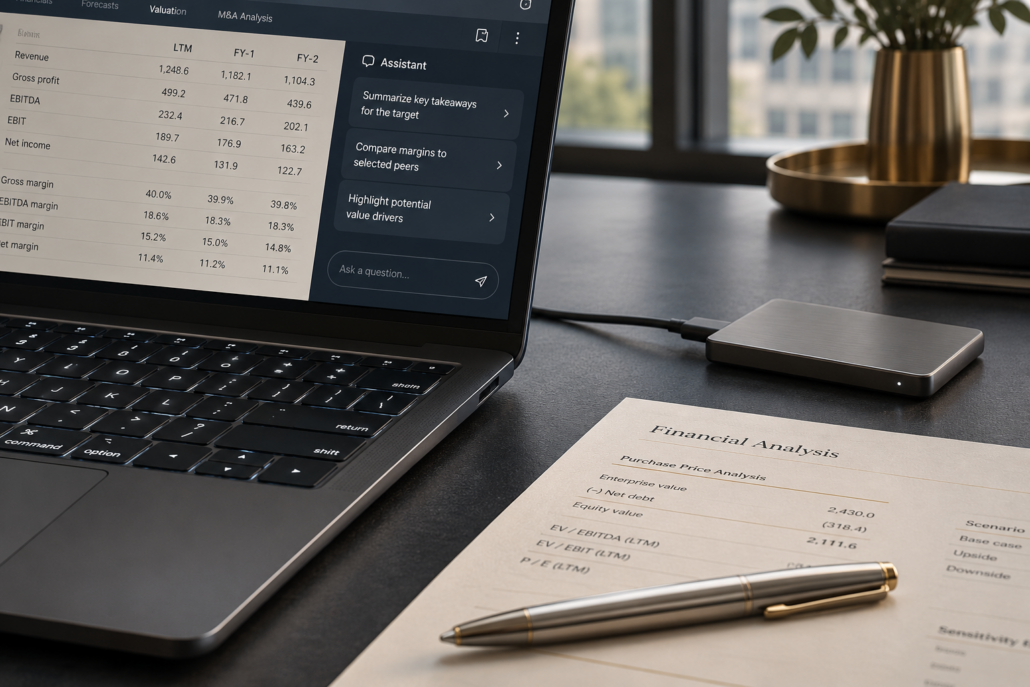
Artificial intelligence expands these capabilities even further. AI assists M&A advisors with industry research, financial analysis, buyer research, document review, and the organization of large amounts of information. Additionally, AI helps identify patterns and summarize information that might otherwise require significant manual effort. However, AI does not replace the M&A advisor. Financial information requires interpretation, and every transaction involves circumstances that technology cannot fully understand. Advisors must determine which information matters and how that information affects value, risk, negotiations, and transaction structure. Likewise, sellers still rely on experienced M&A advisors to manage buyer relationships and negotiate important transaction terms. Technology cannot replace the trust required when an owner sells a business built over many years.
Ultimately, technology in M&A advisory improves the access to information and increases the efficiency of transaction execution. AI will likely accelerate these improvements as its capabilities continue to develop. Nevertheless, M&A remains a relationship-driven business. Technology provides better information, broader market access, and greater efficiency. Experienced M&A advisors must convert those advantages into informed decisions, competitive buyer interest, and disciplined transaction execution.