Normalizing Adjustments: Understanding the Earnings Behind Business Value
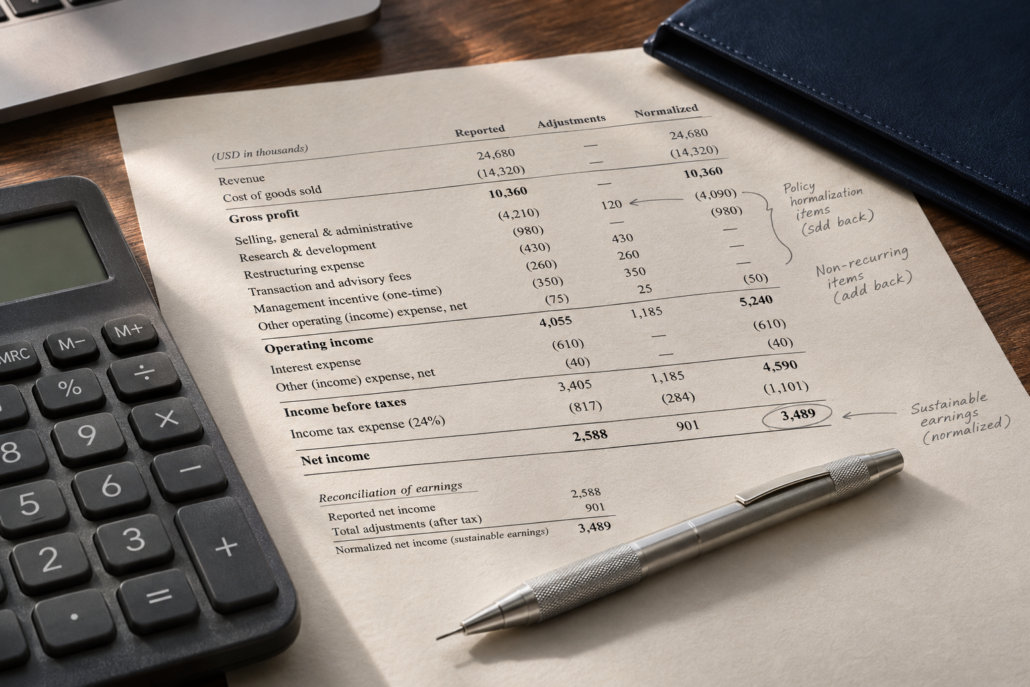
Historical financial statements provide essential information about a company’s performance. However, reported earnings may not always reflect the company’s ongoing economic performance. Normalizing adjustments in M&A help buyers and sellers identify earnings that more accurately represent normal business operations. These adjustments may provide a clearer foundation for evaluating historical performance and estimating future cash flows.
This analysis becomes particularly important because buyers often value lower middle market companies using a multiple of adjusted EBITDA. Therefore, appropriate adjustments may materially affect both normalized earnings and the resulting valuation.
Normalizing adjustments generally address expenses or income that differ from the company’s expected ongoing operations. They may include nonrecurring items, discretionary expenses, non-operating activities, or transactions outside normal market terms.
Common normalizing adjustments in M&A may include:
- Owner Compensation: Adjust compensation that materially exceeds or falls below a reasonable market level.
- Related-Party Rent: Adjust rent paid to owners or affiliates when rates differ from prevailing market terms.
- Owner Perquisites: Review personal expenses passing through the business that a new owner would not continue.
- Nonrecurring Expenses: Consider unusual professional fees, litigation costs, relocation expenses, or other isolated events.
- Related-Party Transactions: Adjust revenues or expenses that do not reflect arm’s-length economic terms.
- Accounting Adjustments: Evaluate accounting practices that may distort comparisons between reporting periods.
- Non-Operating Items: Remove income or expenses unrelated to the company’s core business operations.
Importantly, sellers should not assume that every discretionary or unusual expense qualifies as an adjustment. Buyers will scrutinize each proposed adjustment and determine whether the expense will actually disappear after closing. Likewise, buyers may identify negative adjustments that sellers initially overlook. For example, an owner may receive below-market compensation for responsibilities requiring a higher-cost replacement after closing.
For this reason, normalization should evaluate both positive and negative adjustments. A balanced analysis creates greater credibility and provides a more defensible representation of ongoing earnings. Disagreements over normalized EBITDA frequently become significant negotiation points during an M&A transaction. Each adjustment may affect valuation when buyers apply an earnings multiple to the resulting EBITDA.
Accordingly, business owners should identify and document proposed adjustments before entering the market. Supporting invoices, agreements, payroll information, and other records may help substantiate the adjustments during due diligence.
An experienced M&A advisor will help owners develop a supportable normalized earnings analysis before approaching prospective buyers. Well-supported normalizing adjustments in M&A will strengthen credibility, clarify sustainable earnings, and provide a sounder foundation for business valuation.